Local SEO for Home Service Businesses in 2026: Build a Contractor Website That Generates Leads
For most home service companies, local SEO is not a branding exercise. It is a phone call, a form submission, a message request, or nothing at all.
That is the standard I use when I look at a contractor website. Not whether it looks modern in a vague sense. Not whether the owner likes the colors. Not whether the logo got a refresh. The real question is simpler and harsher: does this site help a nearby customer choose you and contact you quickly?
In 2026, that decision happens across two connected assets. First, your Google Business Profile. Second, your website. Contractors who treat those as separate projects usually leave money on the table. Contractors who build them to reinforce each other tend to create a much stronger lead flow.
If you want to know how to get more leads for contractors without wasting months polishing the wrong things, start there.
Why local SEO still wins for contractors
Homeowners rarely search for a contractor the way people shop for software or clothing. A burst pipe, a dead panel, foundation movement, storm damage, or a kitchen remodel inquiry all begin with geography and urgency. The search is local by default, even when the homeowner does not type a city name.
That changes the shape of a contractor lead generation website. You are not trying to attract everyone. You are trying to become the obvious option for the right service, in the right area, at the right moment.
A plumber in one part of a metro area may lose work to another plumber ten miles away if the second company has a stronger local presence, clearer service pages, and better review visibility. An electrician with a sharp website can still underperform if the Google Business Profile for contractors is incomplete or if calls go unanswered during business hours. A restoration company can rank for relevant searches but still miss leads if the mobile site makes it hard to call fast.
The work is practical. It is not glamorous. But it compounds.
Start with the Google Business Profile, not the homepage mockup
I have seen contractors spend weeks debating website layouts while their Google profile still has outdated hours, thin service details, or no clear service area. That is backwards.
For local SEO for home service businesses, the Google Business Profile often becomes the first thing a prospect sees. Google allows service area businesses to set a service area instead of displaying a storefront address, which matters for contractors who work out of a home office, warehouse, or shared yard and do not want walk-in traffic. It also allows key details like business hours, category, and service area to be shown publicly.
Those details do not feel exciting, but they are often the difference between visibility and confusion.
If you handle plumbing across a multi-city suburban market, your profile should make that geographic reach clear. If you are an electrical contractor that only serves certain counties, it should reflect that reality. If your business hours changed and your profile still shows the old schedule, that mismatch can affect both customer trust and lead handling, especially when calls come in through Google surfaces.
Reviews matter here too. Verified profiles can show customer reviews, and those reviews become part of the trust layer before a prospect ever reaches your site. Just as important, the ability to read and reply to reviews gives a contractor a chance to demonstrate professionalism in public. A calm, direct response to a complaint often says more about the company than ten marketing headlines.
A strong profile does not replace your website. It sharpens the path into it.
The website’s job is narrower than most contractors think
Many contractor websites try to do too much. They chase every idea at once: company history, hiring, photo galleries, financing, every service under the sun, community involvement, supplier logos, and a long paragraph about “quality workmanship.” The result is clutter.
A contractor website that generates leads has a narrower mission. It needs to answer four questions quickly.
- What do you do?
- Where do you do it?
- Why should I trust you?
- How do I contact you right now?
That sounds obvious, but plenty of sites fail one or more of those questions on the first screen.
A homeowner landing on your site from search should not have to guess whether you handle panel upgrades, sewer line work, structural foundation issues, emergency dry-out, or fence installation. They should not have to dig for your service area. They should not have to pinch and zoom to tap the phone number. They should not have to read vague slogans to figure out what problem you solve.
This is where trade-specific website design matters. Good plumbing website design does not feel like a recycled remodeler template. Good electrician website design puts clarity and urgency ahead of decoration. Good foundation repair website design addresses seriousness and trust. Good water damage restoration website design supports immediate action. Good kitchen and bath remodeling website design must handle a longer consideration cycle without burying contact options. Good solar company website design needs clarity around the local market it serves. Good fence contractor website design should make project types and service areas easy to understand.

Different trades, same principle: reduce friction.
Service pages do the heavy lifting
If I could fix one thing on most contractor websites, it would be this: build real service pages instead of cramming every offering into one general page.
A strong local website usually needs dedicated pages for dedicated jobs. Not because more pages are automatically better, but because homeowners search with intent. “Electrician” is broad. “Panel upgrade electrician” is more specific. “Water damage restoration” is not the same intent as “mold inspection” or “emergency extraction.” “Foundation repair” has a different level of urgency and customer anxiety than “concrete leveling” or “drainage correction,” even if the same company handles all of them.
Service pages let you match that intent.
They also create the right bridge from Google to your site. If your Business Profile, reviews, and local visibility bring someone in, the page they land on should confirm that they are in the right place. A page about kitchen and bath remodeling should not read like a plumbing page with a few cabinet photos thrown in. A fence installation page should not sit buried under a generic “services” tab with two sentences of copy.
Good service pages tend to do a few things well. They name the service clearly. They describe the problem the customer is likely facing. They explain the local area served. They make contact easy. They support trust with reviews, project examples, or straightforward language that sounds like a real business, not a brochure.
This is where many contractor lead generation website projects either succeed or stall. Owners often want one page that says, “We do everything.” Searchers usually want proof that you do the exact thing they need.
Service area pages can help, if they reflect real operations
There is a right way and a sloppy way to handle geography.
The sloppy way is to spin up dozens of thin city pages that say essentially the same thing with the city name swapped out. Those pages usually feel fake because they are fake. They exist for rankings first and humans second.
The stronger approach is to build location relevance around the areas you actually serve and the services you genuinely provide there. Google allows service area businesses to define service areas in the Business Profile, and your site should align with that operational reality.
If you serve Houston and the surrounding region, your pages should not imply you cover places you do not. If your restoration team can respond quickly in one cluster of communities but not in a distant county, say that clearly. If your remodeling company works across a metro area but only takes larger projects in outer suburbs, your website should reflect that nuance.
Local SEO for home service businesses works better when the website and the Google profile tell the same story.
Mobile is not a design preference, it is lead infrastructure
Google strongly recommends mobile-friendly pages, and for contractor websites that recommendation has practical consequences. Most local service leads do not begin with a leisurely desktop research session. They begin in a driveway, at a kitchen table, from a workplace parking lot, or during a stressful household problem.
If your mobile site is slow, crowded, or awkward, you are not just creating annoyance. You are making it easier for the prospect to hit the back button and call someone else.
I have watched this happen in countless small-business sites. The desktop version gets all the attention because that is where the owner reviews mockups. Meanwhile, the mobile version, where the calls actually come from, ends up with tiny buttons, bloated image sections, and contact forms that ask for too much.
A contractor website that generates leads should feel almost frictionless on a phone. The service should be obvious. The call button should be easy to tap. The form should be short enough that someone under pressure will actually complete it. If your business handles urgent jobs, that urgency should shape the mobile experience from top to bottom.
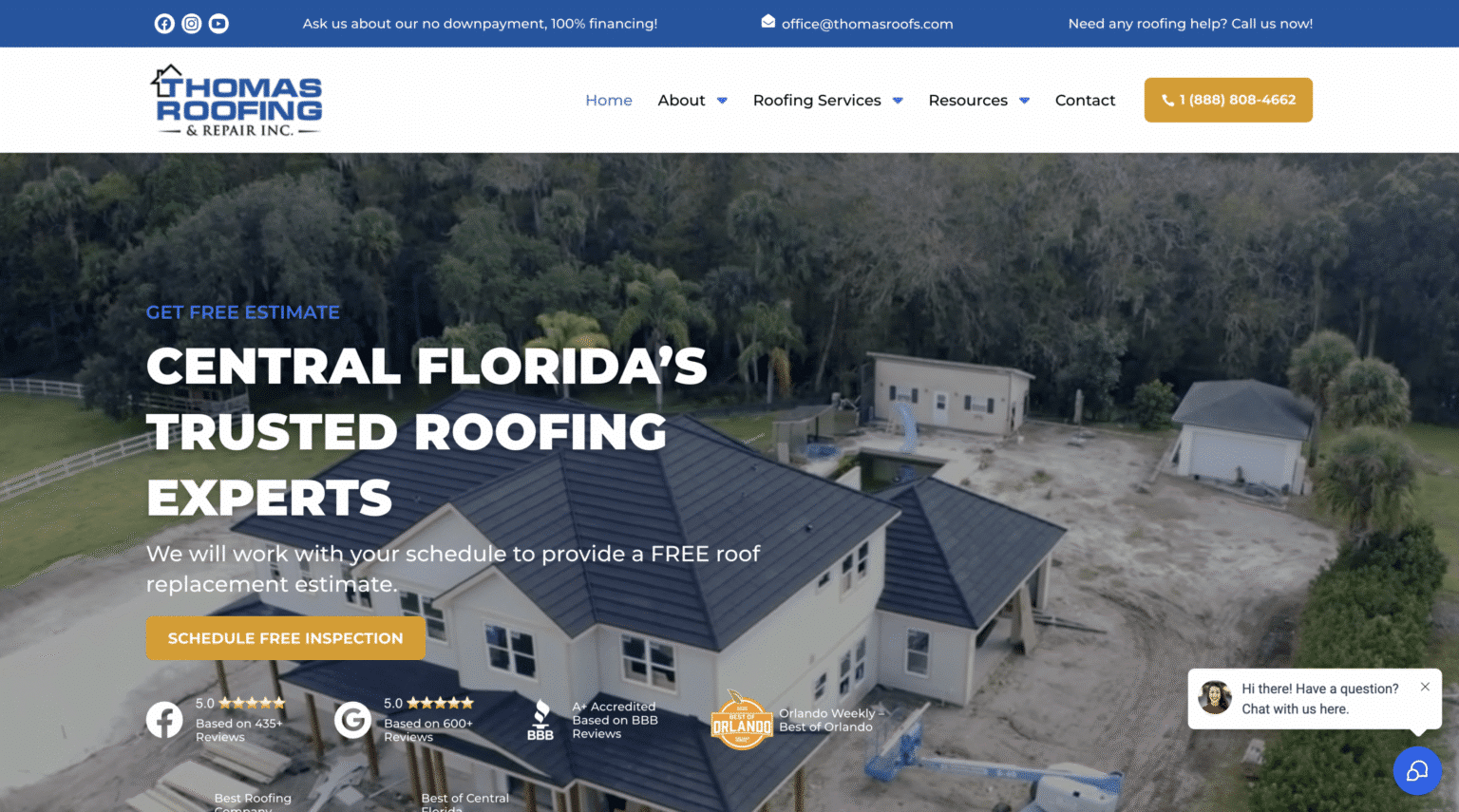
This matters even more if you also run Local Services Ads or rely on calls through Google, because lead handling can involve calls or message requests, and missed calls become part of the picture. Fast contact paths are not a nice extra. They are central to conversion.
Reviews are not a side task anymore
A lot of contractors know reviews matter, but they still treat review generation as something they will “get to later.” Later usually means after the busy season, after the website launch, after the office hire, after trucks get wrapped. In practice, later means never.
That is expensive.
Reviews are visible on the Google profile, and they influence how a prospect reads everything else about your business. A company with a clean website and weak review presence often loses to a company with a decent website and stronger recent review activity. Not every time, but often enough that the pattern is hard to ignore.
The timing matters too. A stack of old reviews can still help, but a profile that keeps adding current feedback signals a business that is active and still earning trust. This is especially important in trades where customers are letting strangers into the home or approving large-ticket work.
You do not need a theatrical reputation strategy. You need a consistent one. Ask after successful jobs. Make it easy. Reply professionally. Learn from what customers actually praise. Sometimes the details surprise owners. It is not always craftsmanship language. Often it is communication, punctuality, cleanup, or calm problem-solving.
Those are marketing assets hiding inside operations.
Speed to lead beats perfect copy
When contractors ask how to get more leads for contractors, they usually mean traffic. In many cases, the bigger problem is not traffic but lead handling.
Google’s local service ecosystem supports calls and message requests, and business hours can flow from your Business Profile. That means your setup and responsiveness affect what happens after visibility. If a prospect calls and no one answers, the quality of your service page stops mattering. If a message sits untouched, the review count does not save you.
I have seen businesses double down on rankings when the real issue was simple: too many calls were missed, callbacks were slow, or no one owned the inbox. Even a basic missed-call text-back process can outperform a flashy redesign if the previous setup let warm leads cool off.
This is one of those areas where trade owners sometimes resist reality. They want the website to solve a staffing or process issue. It cannot. It can make the phone ring. It cannot force someone to answer it.
What the best lead-generating contractor sites usually share
Most of the strongest sites I have reviewed are not the most elaborate. They are the clearest. They tend to share a handful of traits:
- a clear service focus on each major page
- visible service areas that match real operations
- strong mobile usability with obvious tap-to-call paths
- recent reviews and public responses where appropriate
- tight alignment between the website and the Google Business Profile
None of that is flashy. All of it works.
Trade-specific examples where judgment matters
A plumbing website design often needs to support both urgent and non-urgent intent. Leak repair, drain issues, and water heater failures create one kind of lead behavior. Repipes or fixture upgrades create another. If the site treats every service with the same tone, it misses that distinction.
An electrician website design has a similar split. Emergency troubleshooting and outage-related work tend to demand speed. Panel upgrades, EV charger installs, and lighting improvements may involve more comparison shopping. The pages can still live under one brand system, but the conversion path should reflect the searcher’s mindset.
Foundation repair website design benefits from seriousness and specificity. Customers are often anxious, and they are usually not experts. Overly polished language can actually undermine trust if it sounds evasive. Clear explanations and local service confidence matter more than marketing flair.
Water damage restoration website design is where speed becomes unavoidable. A site for this trade must shorten the path to contact as much as possible. If the layout forces a stressed homeowner through a maze, it fails at the moment that matters most.
Kitchen and bath remodeling website design is different because the buying cycle is longer. People browse more, compare more, and often look for proof of style and professionalism over time. But even here, local trust signals and a clear path to inquiry still drive results.
Solar company website design and fence contractor website design have their own nuances, yet both still depend on the same local fundamentals: where you work, what you install, how a prospect reaches you, and whether your profile and website support the same message.
Tracking should be simple enough that it actually gets used
A surprising number of contractors cannot answer a basic question: which marketing source produced the call?
That is a problem because local SEO can look successful while generating the wrong kind of demand, or because paid efforts can quietly outperform organic work in certain seasons or markets. Without source visibility, owners tend to make decisions based on memory and gut feel.
Tracking does not have to be elaborate to be useful. What matters is consistency. If calls come through the site, through the Google profile, or through local service channels, you want a practical way to review what happened. Which pages produce inquiries. Which service lines convert. Which areas respond. Where missed calls occur. Whether messages are answered quickly.
Those insights help shape your next website update far better than design opinions do.
The role of ongoing updates
A lead-generating site is rarely a one-and-done build. Services change. Hours change. Coverage areas shift. Photos age. Review signals grow. New service pages become necessary. Underperforming pages need rewrites. What worked for a five-truck company may hold back a twenty-truck operation.
That is one reason many contractors struggle with websites after launch. They assume the project is finished, but local SEO is maintained through small, accurate, repeated updates. If your profile says one thing and your website says another, confusion starts. If your office adds a new service but the site never gets a page for it, search demand may never connect with your business properly.
This is less about constant reinvention and more about operational honesty. Your digital presence should match the company you are today, not the company you were two years ago.
Where to focus first if your site is underperforming
If a contractor came to me with a weak local presence and asked where to start, I would not begin with a full rewrite of every page. I would look at the foundations.
Is the Google Business Profile verified and complete? Does it use the right service area setup for a service-area business? Are hours, category, and service details accurate? Are reviews coming in, and are responses being handled professionally? Does the website have dedicated service pages instead of one broad catch-all page? Is the mobile version easy to use? Can someone call in seconds? Are the service areas on the site consistent with the profile? Does the team actually respond fast when calls and messages arrive?
Fixing those basics usually beats chasing trendy tactics.
A contractor website that generates leads is not built from tricks. It is built from alignment. The profile, the pages, the mobile experience, the reviews, and the lead handling process all have to point in website design for contractors the same direction. When they do, local SEO starts acting less like a mystery and more like what it really is: a disciplined way to get chosen in your market.